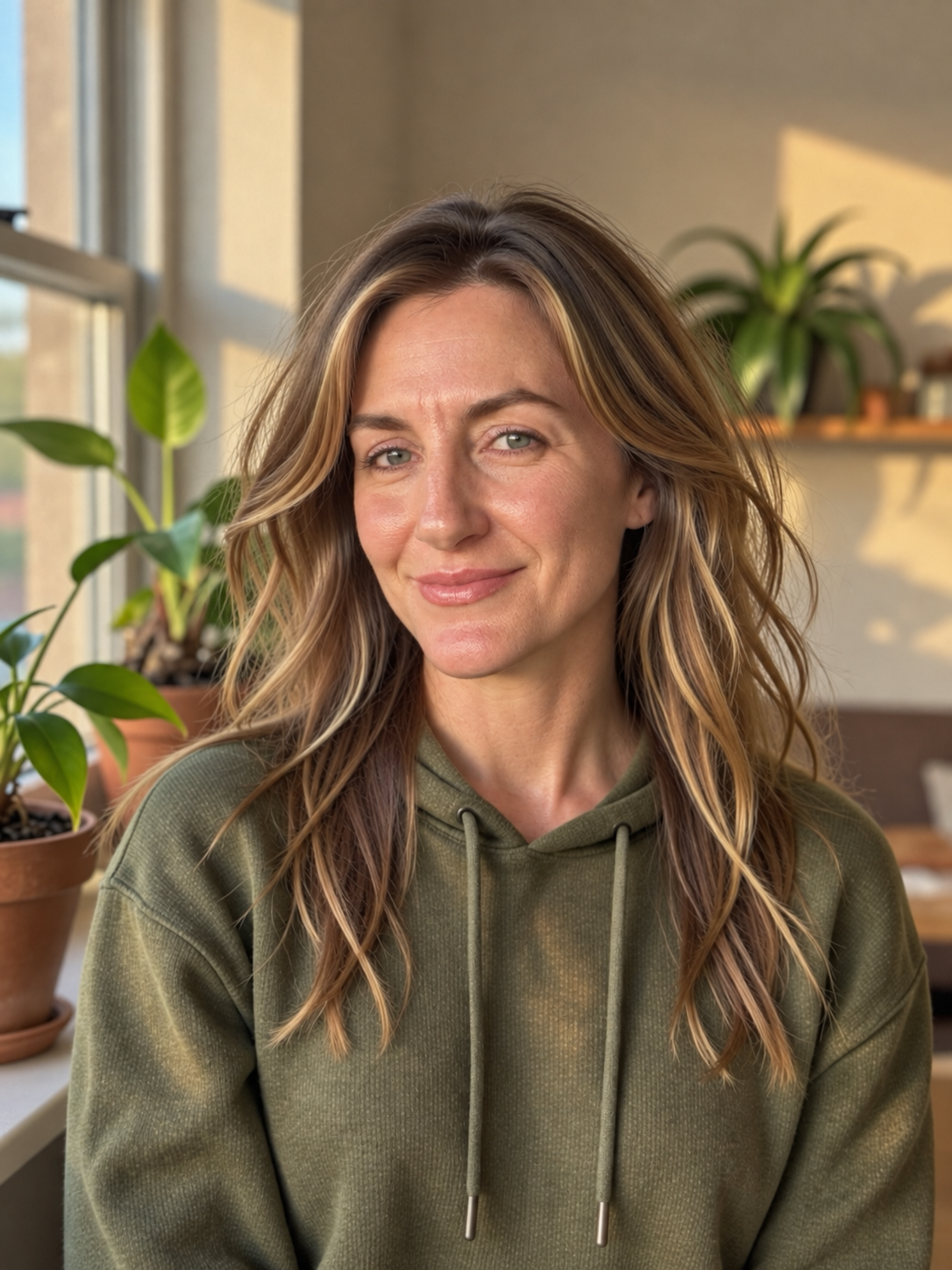
Kerstin Wiggins, MSW
Hi, I’m Kerstin.
I am a two-time breast cancer survivor and a longtime caregiver for family members living with cancer and Alzheimer’s disease.
I know what it feels like for illness to reach far beyond the body and into every part of life. To move between being a patient, survivor, and caregiver while trying to keep up with appointments, work, relationships, decisions, and everything else life continues to ask of you.
That lived experience is the foundation of my work as a researcher and patient navigator—bridging the gap between standard medical care and the emotional, relational, and practical realities patients and families carry every day.
One of the most important parts of this work for me is finding language for experiences that are deeply felt but too often go unnamed and unseen.
Too many of us carry the isolation, sadness, grief, frustration, anger, and rage alone. We hold it in because we are afraid of burdening the people around us—or because we don’t yet have the words to describe this new and unsettling reality.
After my diagnosis, I wasn’t only trying to manage symptoms, side effects, and follow-up care. I was desperately seeking to understand changes in my body, my energy, my identity—and the frightening feeling that I no longer recognized myself. So much of what I was experiencing didn’t fit neatly within the usual language of treatment and survivorship.
Caregiving has shown me the other side of this same experience. Much of what it means to live with illness or care for someone you love happens beyond the doctor’s office—in relationships, homes, work, finances, changing roles, difficult decisions, and the quiet labor of simply getting through each day.
My work is to help make these experiences visible and give people language for what they are carrying. By studying the experiences that often go unseen or unmeasured, we can translate these lived realities into clear patterns and research evidence, we can shape healthcare programs and systems that are truly responsive to the whole person.
Whether I am supporting one person, facilitating a group, developing a program, or contributing to research, I return to the same questions:
What is happening in patient and family lives that healthcare has not yet made room for?
And how can we design systems of care that are equitable and responsive to those full realities?
Beyond the work:
Based in the Texas Hill Country outside Austin, I live and work in a landscape that invites a slower pace. Managing chronic illness has taught me that rest, pleasure, and unstructured time aren't luxuries—they're essential. I try to offer myself the same spaciousness I advocate for others, whether through quiet mornings with a hot cup of coffee, trail walks with my puppy Moose, kayaking on Lake Travis, or afternoons with no set agenda.